Space Exploration: Beyond Mars And The Moon
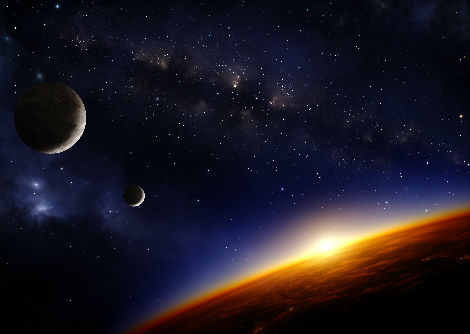
Space exploration has long captured the imagination of humanity, driving us to push the boundaries of our understanding and capabilities. While missions to Mars and the Moon have dominated headlines and scientific endeavors in recent years, the quest for exploration doesn't end there. Beyond these celestial neighbors lie a plethora of intriguing destinations, each holding the promise of new discoveries and opportunities for human expansion into the cosmos.
:Exploring the Asteroid Belt:
One of the most fascinating regions beyond Mars and the Moon is the asteroid belt, situated between the orbits of Mars and Jupiter. This vast expanse contains millions of rocky bodies, ranging in size from tiny fragments to dwarf planets like Ceres. Asteroids are not just interesting from a scientific standpoint; they also represent potential sources of valuable resources such as metals, water, and even organic compounds. Mining asteroids could one day fuel future space missions and even support life beyond Earth.
:Journey to the Gas Giants:
Venturing farther into our solar system brings us to the gas giants: Jupiter, Saturn, Uranus, and Neptune. While these massive planets have been studied extensively by space probes like Voyager and Cassini, there is still much to learn about their moons and atmospheres. For example, Jupiter's moon Europa is believed to harbor a subsurface ocean beneath its icy crust, making it a prime target in the search for extraterrestrial life. Similarly, Saturn's moon Titan boasts a dense atmosphere and methane lakes, offering unique opportunities for scientific exploration and even colonization in the distant future.
:Exploring Exoplanets:
Beyond our solar system lie countless other star systems, each potentially harboring planets of their own. Thanks to advancements in telescope technology and space-based observatories like the Kepler and TESS missions, astronomers have discovered thousands of exoplanets orbiting distant stars. While many of these worlds are inhospitable gas giants or scorching hot rocky planets, a growing number fall within the "habitable zone" where conditions might be right for liquid water and, by extension, life as we know it. The prospect of studying these distant worlds up close, perhaps even sending robotic probes or manned missions to explore them, represents the next great frontier in space exploration.
:Challenges and Opportunities:
Of course, venturing beyond Mars and the Moon presents numerous challenges, from the vast distances involved to the harsh environments of other planets and moons. However, each challenge also presents an opportunity for innovation and discovery. Technologies like advanced propulsion systems, autonomous robotics, and life support systems will be essential for enabling long-duration missions to distant destinations. Moreover, international collaboration and public-private partnerships will play a crucial role in pooling resources and expertise to tackle these ambitious goals.
:Conclusion:
As we look to the future of space exploration, it's clear that our journey doesn't end with Mars or the Moon. From the asteroid belt to the outer reaches of our solar system and beyond, there are countless worlds waiting to be explored and understood. By embracing the spirit of curiosity, innovation, and cooperation, humanity can continue to push the boundaries of exploration, expanding our understanding of the universe and our place within it. The next chapter in our cosmic story is waiting to be written – let's embark on this journey together, reaching for the stars and beyond.

No comments:
Post a Comment